

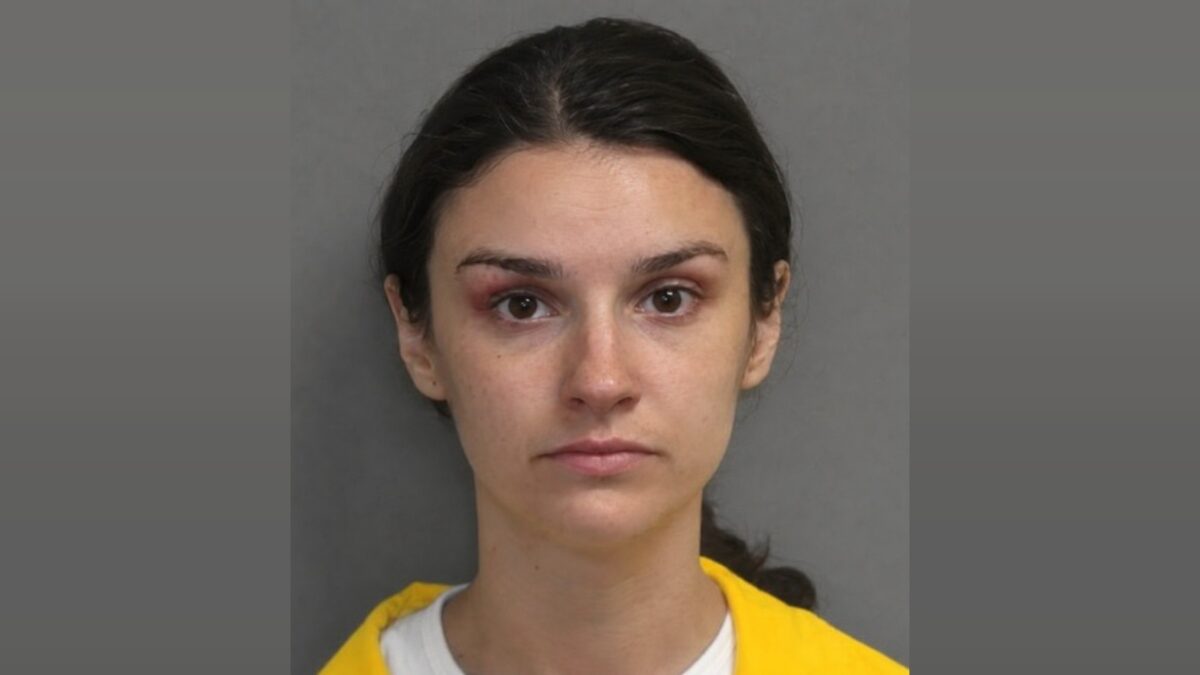
A Maryland woman who spent more than a decade telling family members, friends and strangers about her battle with a rare form of cancer is now facing felony theft charges. Alexandra “Lexi” Thomas, 34, was arrested Thursday after a Howard County grand jury indicted her on allegations that she took money from people who believed they were helping save her life.
But this story isn’t just about an alleged fundraising scheme. It involves a supposedly incurable cancer, an extraordinary medical miracle, a clinical trial that allegedly killed every other participant, a doctor who would become a household name during the COVID-19 pandemic, and even a woman who left Thomas part of her estate.
It is the kind of story that sounds like the plot of a television drama. The only problem is that dozens of people who believed Thomas’ story say they were living it.
And according to her estranged husband, the entire cancer story was made up.
Let’s start at the beginning.
Act I: Lexi’s Diagnosis
The story begins more than a decade ago, when Thomas was a young woman living in Maryland.
Thomas began documenting what she described as a serious medical condition, eventually telling friends and family she was battling an extremely rare form of blood cancer.
By 2014, she had a blog called Romans 8:28, named after the Bible verse about God working all things together for good.
The blog chronicled her alleged treatments, medical complications, uncertainty about her future and the emotional toll of living with cancer.
In a Thanksgiving Day post dated Nov. 27, 2014, Thomas discussed kidney damage and the possibility of further chemotherapy. She also expressed gratitude for the people who were supporting her.
To anyone reading, the blog presented the story of a young woman facing a potentially fatal disease with faith and determination.
Her friends and family responded the way most people would respond when someone they love is facing a deadly disease. They offered emotional support, prayers and financial assistance.
But Thomas’ medical story was about to become considerably more extraordinary.
Act II: The Miracle
As the years passed, Thomas’ account of her illness grew increasingly complicated.
She reportedly told people her cancer was so rare that it had never before been observed in a living patient.
According to court documents described by The Baltimore Banner, Thomas later told Gavin Hannan, the man who would become her husband, that she had participated in an experimental medical trial.
The trial, she allegedly claimed, had included 22 patients.
Twenty-one of them died.
Thomas claimed she was the sole survivor.
Unfortunately, according to the story she told those closest to her, surviving the original cancer wasn’t the end of her medical problems.
She reportedly developed another cancer, non-Hodgkin lymphoma, and claimed she was undergoing experimental treatment through the National Institutes of Health.
The treatment program was supposedly so sensitive that friends and family could not accompany her to appointments.
Thomas would leave home for days at a time, allegedly to receive treatment.
Her supposed medical team wasn’t exactly ordinary, either.
According to the annulment petition Hannan would eventually file, Thomas claimed more than 80 physicians were involved in her care.
One of them was allegedly Dr. Anthony Fauci, the infectious disease expert who would later become one of the most recognizable physicians in the country during the COVID-19 pandemic.
But perhaps the most remarkable part of Thomas’ medical story involved something that reportedly happened on Nov. 7, 2017.
According to an online fundraising appeal organized by her brother-in-law, Dan Goldsmith, Thomas suffered a catastrophic reaction during an experimental treatment.
Her brain allegedly swelled, her heart stopped, and she died.
For 20 minutes.
Then, according to the fundraiser’s account, doctors managed to bring her back to life.
Not only had Thomas supposedly survived, but the treatment had also cured her previously incurable cancer.
It was, quite literally, presented as a medical miracle.
The fundraiser claimed Thomas’ story subsequently attracted more than 92,000 readers to her blog and earned her a “Young Adult of Great Influence” award from the National Cancer Institute at an event in New York City.
And, of course, there was another chapter.
Thomas reportedly developed a new, aggressive lymphoma.
According to the fundraising appeal, she was rejected from 211 clinical trials over nine months before finally receiving conditional acceptance into a 212th.
There was just one obstacle.
Money.
Act III: The Money
Cancer treatment can be extraordinarily expensive, and Thomas’ story generated considerable sympathy among people who believed she was fighting for her life.
Supporters organized fundraising campaigns to help cover the medical costs.
One GoFundMe campaign launched in August 2016 raised a reported $58,514.
The following December, the Knights of Columbus Father Rosensteel Council in Silver Spring advertised a fundraiser benefiting Thomas. Tickets were priced at $40 per person or $75 per couple, with food, drinks and live music included.
But the fundraising continued.
On April 11, 2018, Goldsmith organized another GoFundMe campaign called One More Miracle For Lexi.
The appeal described Thomas’ purported recovery from her original cancer, the extraordinary incident in which she allegedly died for 20 minutes, and her renewed struggle with lymphoma.
According to the appeal, Thomas needed another $60,000 to cover treatment costs, including previous medical expenses and a down payment for additional chemotherapy.
An anonymous donor was reportedly offering to match contributions up to $25,000.
The appeal also assured prospective contributors that Thomas’ illness and financial needs were genuine.
The campaign ultimately raised $140,534 from 1,408 donors, according to the GoFundMe page, which remains publicly accessible with donations paused.
Combined, the two online campaigns raised a reported $199,048.
That doesn’t include money collected through other community fundraisers or potential private contributions.
It is important to point out that these figures represent reported fundraising totals, not money prosecutors have established Thomas personally received or stole.
At the time, however, the people organizing these campaigns apparently believed they were helping someone they loved.
Goldsmith, Thomas’ brother-in-law, was among those working to raise money for her treatment.
Years later, he and his wife would appear on an investigative podcast questioning the very story they had helped promote.
Act IV: The Pictures And The Doctors
As the years passed, Thomas continued to share accounts of her alleged illness.
There were medical updates, photographs and purported communications from doctors.
But eventually, people began looking more closely at the evidence.
And according to allegations detailed in a podcast called The Lexi CON and in court documents, some of the photographs Thomas presented as evidence of her medical treatment weren’t actually photographs of her.
Investigators and family members allege that Thomas obtained photographs of cancer patients from the internet and manipulated them to make it appear she was the person undergoing treatment.
In some instances, they allege, her face was placed onto photographs of other patients.
The allegations went beyond photographs.
The podcast’s investigators and Thomas’ estranged husband have also questioned purported communications from her medical team, including messages allegedly involving Fauci.
According to Hannan’s annulment petition, physicians Thomas claimed had treated her for years had no records of her as a patient.
That would be a rather significant problem for someone who had supposedly survived multiple cancers and years of highly specialized medical treatment.
By this point, the questions were no longer simply about whether an illness had been exaggerated.
People were beginning to question whether the cancer had existed at all.
Act V: The Husband
Gavin Hannan met Thomas in 2017.
According to court documents, she told him about her rare blood cancer, her extraordinary survival and her continuing experimental treatments.
They married in 2019.
Throughout their relationship, Hannan allegedly believed his wife was seriously ill.
Thomas reportedly continued leaving home for days at a time to participate in her supposed clinical trial.
According to his later court filings, the couple also maintained separate finances at her request.
For years, Hannan lived with the understanding that his wife had survived a deadly illness and was continuing to receive specialized medical care.
Then, in August 2025, an investigative reporter contacted him.
The reporter was Nancy Moscatiello, who had been investigating Thomas’ story with Scott Eldridge.
The two had previously worked on Scamanda, an investigation involving a California woman who fabricated a cancer diagnosis and collected donations.
The reporters had received a tip about Thomas and spent years examining her claims.
According to Hannan’s annulment petition, the information he learned led him to conclude that his wife’s medical history was fictitious.
He alleged that Thomas had never had cancer.
Hannan also claimed that when he confronted his wife, she said she was suicidal and required hospitalization.
In October 2026, he filed for an annulment, alleging that he had entered the marriage believing a story that wasn’t true.
He also sought a resolution concerning the couple’s Howard County home, which they had purchased for $640,000 in 2022.
But the marriage wasn’t the only financial relationship investigators were examining.
Act VI: The Inheritance
Thomas’ alleged illness had reportedly become a concern for more than just her immediate family.
Among the people worried about her health was Marie Lindung, an older woman who had known Thomas’ family through their church.
Lindung was Thomas’ godmother and considered her something like a granddaughter.
According to reporting by The Baltimore Banner, Lindung frequently spoke about Thomas’ health and the treatments she supposedly needed.
On March 29, 2021, Lindung updated her will.
She left 25% of her estate to Thomas and named Thomas’ mother, Elizabeth, as executor.
The remaining 75% was left to another relative.
Just two weeks later, on April 12, Lindung died at age 83.
The following year, Thomas and Hannan purchased Lindung’s Howard County home from the estate, according to property records cited by The Banner.
Lindung’s nephew, Bryan Lindung, told the newspaper that his aunt had cared deeply about Thomas and would have been furious to learn of the allegations.
There is an important distinction here: The inheritance is part of the broader story, but the available criminal charges do not establish that Thomas illegally obtained it or that the will was changed because of fraud.
Nevertheless, the allegations raise questions about how far Thomas’ purported illness may have influenced the financial decisions of people who believed her.
Act VII: The Story Unravels
On Oct. 19, 2026, The Lexi CON podcast began releasing its investigation.
The series featured interviews with family members, former friends and others who questioned Thomas’ medical claims.
The producers alleged that what appeared to be a remarkable story of survival was instead a yearslong deception.
A few days later, The Baltimore Banner reported the allegations and the annulment petition filed by Hannan.
Howard County police confirmed to the newspaper that they were aware of the allegations and were examining them.
The story soon expanded beyond the podcast.
GoFundMe confirmed it was investigating Thomas’ fundraising campaigns.
And the people who had once helped promote her story were now speaking publicly about the possibility they had been deceived.
Among them were Thomas’ sister, Meghan Goldsmith, and her husband, Dan.
The same brother-in-law who had organized fundraising campaigns to help Thomas supposedly survive cancer was now identified among the alleged victims in a criminal indictment.
It was a remarkable reversal.
The people who had helped Thomas tell her story were now helping investigators determine whether any of it was true.
Act VIII: The Arrest
A Howard County grand jury indicted Thomas on Nov. 18, 2026, on two felony theft charges.
The first involves an alleged theft scheme between Aug. 18 and Nov. 12, 2016, involving between $1,000 and $10,000.
The second involves an alleged theft scheme between Dec. 24, 2017, and Jan. 11, 2019, involving between $1,500 and $25,000.
Thomas was arrested Nov. 19.
The indictment identifies more than two dozen alleged victims, including Thomas’ sister and brother-in-law and her estranged husband’s parents.
The charging document provides limited information about the specific transactions involved, and the amounts alleged in the criminal counts are considerably smaller than the overall fundraising totals.
Thomas was initially held without bond, and a court appearance is scheduled for Dec. 2 in Howard County Circuit Court.
Her attorney, Max Maccoby, declined to comment when contacted by The Baltimore Banner on Friday.
Thomas has not been convicted of the charges, and the allegations that she fabricated her medical history have not been established by a criminal verdict.
For the people who supported Thomas, however, the indictment marks another chapter in a story that began more than a decade ago.
The Goldsmiths said in a statement that they hoped donors would eventually recover their money and that the legal process would bring accountability.
Finale: The Cost Of A Miracle
There is an interesting contrast between the story Thomas told for years and the story prosecutors are now presenting.
In one version, a young woman survived an incurable cancer, died and was revived, received treatment from some of the nation’s most prominent physicians, and inspired thousands of people through her extraordinary determination.
In the other, prosecutors allege that people were persuaded to part with their money under false pretenses.
The criminal justice system will now have to determine what Thomas did and whether she violated the law.
But there is another question that goes beyond the charges.
What happens to the trust of people who contributed money, organized fundraisers, offered prayers and supported someone they believed was facing death?
Cancer is a devastating disease. Communities routinely come together to help families struggling with the costs of treatment, often with little more than a personal story and faith in the person telling it.
Those acts of generosity depend on trust.
And if the allegations against Thomas are proven, the damage won’t be measured only in dollars.
It will also be measured in the willingness of people to believe the next person who asks for help.