

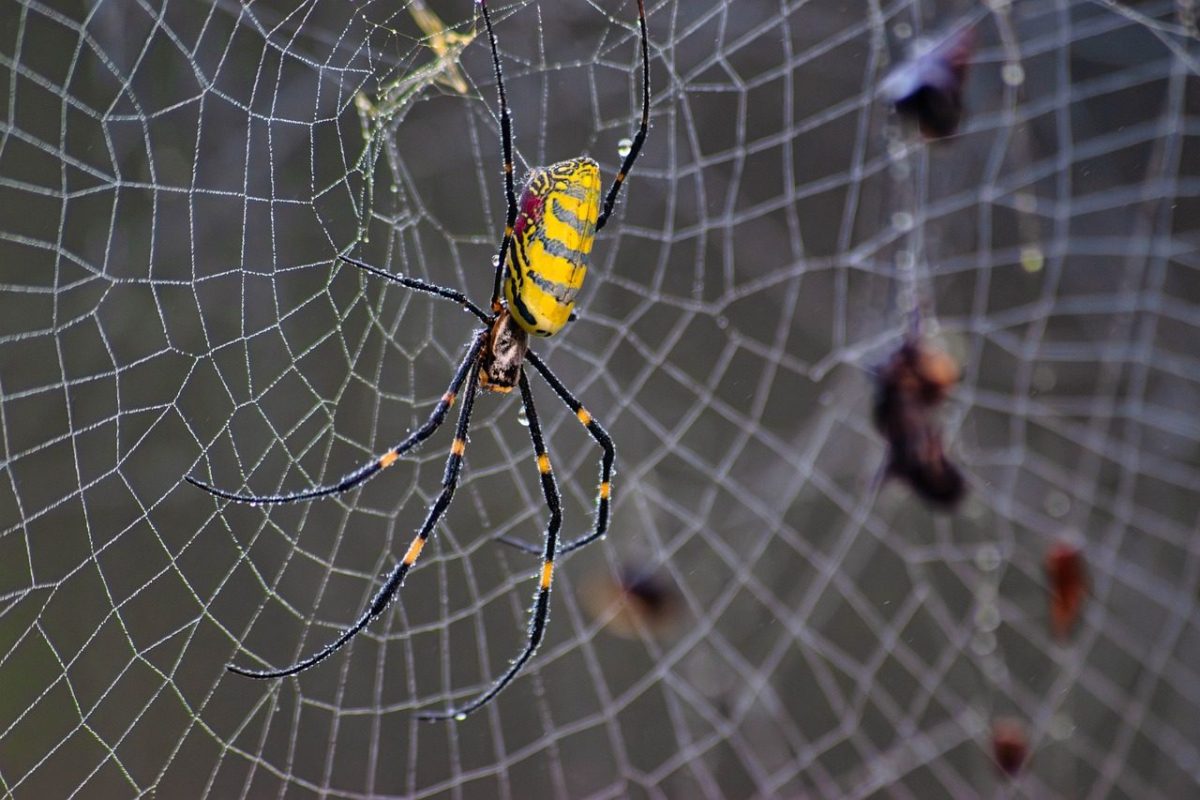
A palm-sized spider from Asia has landed in Maryland after spreading across the Southeast for a decade.
What’s Happening: Joro spiders were first found near Elkridge in 2022 and have now been spotted across Baltimore and the Eastern Shore. The bright yellow and black spiders grow up to four inches wide with legs that stretch to eight inches.
What’s Important: The spiders are not dangerous to people or pets. Research shows their fangs are too small to break human skin, and even when they do bite, people have little to no reaction.
Between the Lines: These spiders are pushing out native species wherever they show up. A Washington College professor found that Joro spiders quickly become the most common spider in an area within just a few years.
- Where Joro populations are high, native spiders disappear almost completely.
- The spiders eat whatever lands in their webs, from stink bugs to butterflies and bees.
Catch Up Quick: The spiders arrived in Georgia around 2010, likely as stowaways on cargo ships from East Asia. Baby spiders use a trick called ballooning, shooting silk threads into the air to ride wind currents and travel up to 100 miles at a time. This helped them spread across 120,000 square kilometers spanning Georgia, South Carolina, North Carolina, Tennessee, and into Maryland.
The Big Picture: Scientists expect Joro spiders to keep spreading north into New York and New Jersey. The spiders thrive in climates similar to their native range spanning from northern Japan to Taiwan. They can survive brief freezes that kill other spiders and have double the metabolism of their relatives. Maryland’s climate matches their preferred habitat perfectly.
What Residents Should Do: A Washington College researcher is asking people to report sightings using the free iNaturalist app. The spiders are most visible from late fall through early December when adult females reach full size. Look for their distinctive golden-yellow webs up to 18 inches wide, often built on homes, porches, power lines and landscape plants.
The Sources: Washington College, University of Maryland, Clemson University, University of Georgia, iNaturalist, Farmers’ Almanac
Discover more from The Free State Press
Subscribe to get the latest posts sent to your email.