
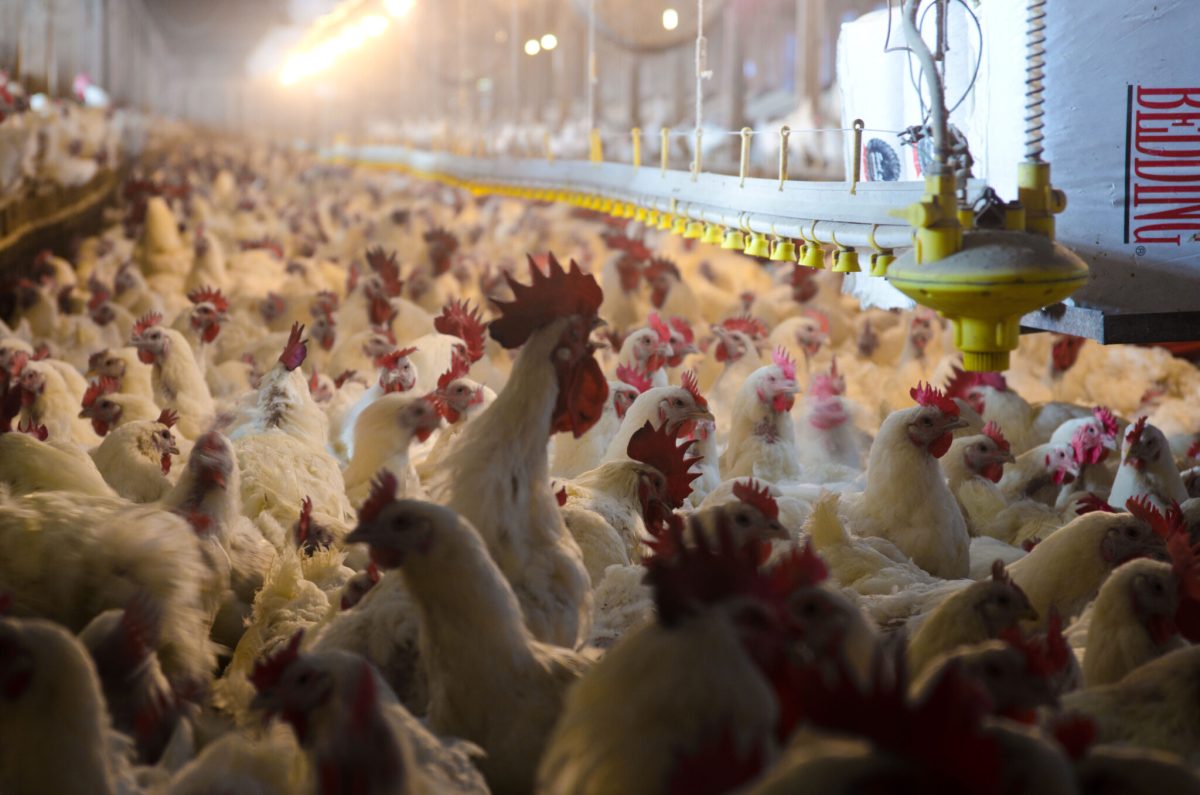
State agriculture officials announced this week that the highly pathogenic H5 avian influenza, known as bird flu, was detected on a commercial farm in Caroline County, the first case detected in Maryland this year.
The Maryland Department of Agriculture said in a statement Thursday that preliminary results of testing on a broiler chicken farm in the county detected the highly contagious virus among birds on the farm, where the birds are raised for meat production.
“State officials have quarantined all affected premises, and birds on the property are being or have been depopulated to prevent the spread of the disease,” the statement said. “Birds from the affected flock will not enter the food system.”
Jennifer Trout, the state veterinarian, said Friday that there’s a low risk to public health, but that those who regularly interact with birds should brush up on biosafety measures.
Those apply to commercial farmers and those with backyard flocks: Change clothes after working on poultry farms, wear boot coverings while working with and around birds, and disinfect tools and equipment that may have come in contact with birds or their droppings, among other measures. From left, Department of Natural Resources Assistant Secretary Paul Peditto, State Veterinarian Jennifer Trout, Agriculture Secretary Kevin Atticks and Agriculture Deputy Secretary Steven Connelly discuss bird flu cases in 2025 testimony in Annapolis. (Photo by Danielle J. Brown/Maryland Matters)
Bird flu is not new but has been of particular interest within the past few years as more migratory birds have been infected than in previous years. Meanwhile, more cases of bird flu are being detected in mammals.
“It’s getting more and more endemic,” Trout said.
Public health researchers warn that bird flu has the potential to evolve into a harder-to-manage virus that could more easily harm humans.
According to the Centers for Disease Control and Prevention, there have been 71 human cases of bird flu, two of which were fatal, since 2024.
“Avian influenza is a highly contagious airborne respiratory virus that spreads easily among birds through nasal and eye secretions, as well as manure,” the department said in its statement. “The virus can be spread in various ways from flock to flock, including by wild birds, through contact with infected poultry, by equipment, and on the clothing and shoes of caretakers.”
Caroline County happens to also be where the first bird flu case was detected in the state last year. Trout said it was the “luck of the draw” that Caroline County was the site of the state’s first bird flu cases now for two years in a row, noting that there are about 120 poultry farms in the county.
In 2025, six commercial farms on the Eastern Shore were hit by cases of avian flu, along with a handful of cases from wild birds. The last case in 2025 occurred in Queen Anne’s County on Dec. 29, according to data from the U.S. Department of Agriculture.
The damage from avian flu in commercial or backyard flocks can be devastating. Due to the rapid spread of the virus, biosafety measures require all chickens in the affected flock to be quarantined and “depopulated” – systematically killed – to keep the disease from spreading further.
Trout said that the affected facility in Caroline County has about 37,000 birds, which are getting depopulated. The loss of those chickens can result in significant economic challenges for the farmers as well.
“It’s a big deal for the growers,” Trout said.
So far this year, the USDA said there have been reports of 59 flocks across the country being hit by bird flu, affecting 2.8 million birds from 17 commercial flocks and 42 backyard flocks.
Maryland Matters is part of States Newsroom, a nonprofit news network supported by grants and a coalition of donors as a 501c(3) public charity. Maryland Matters maintains editorial independence. Contact Editor Steve Crane for questions: editor@marylandmatters.org.
Discover more from The Free State Press
Subscribe to get the latest posts sent to your email.