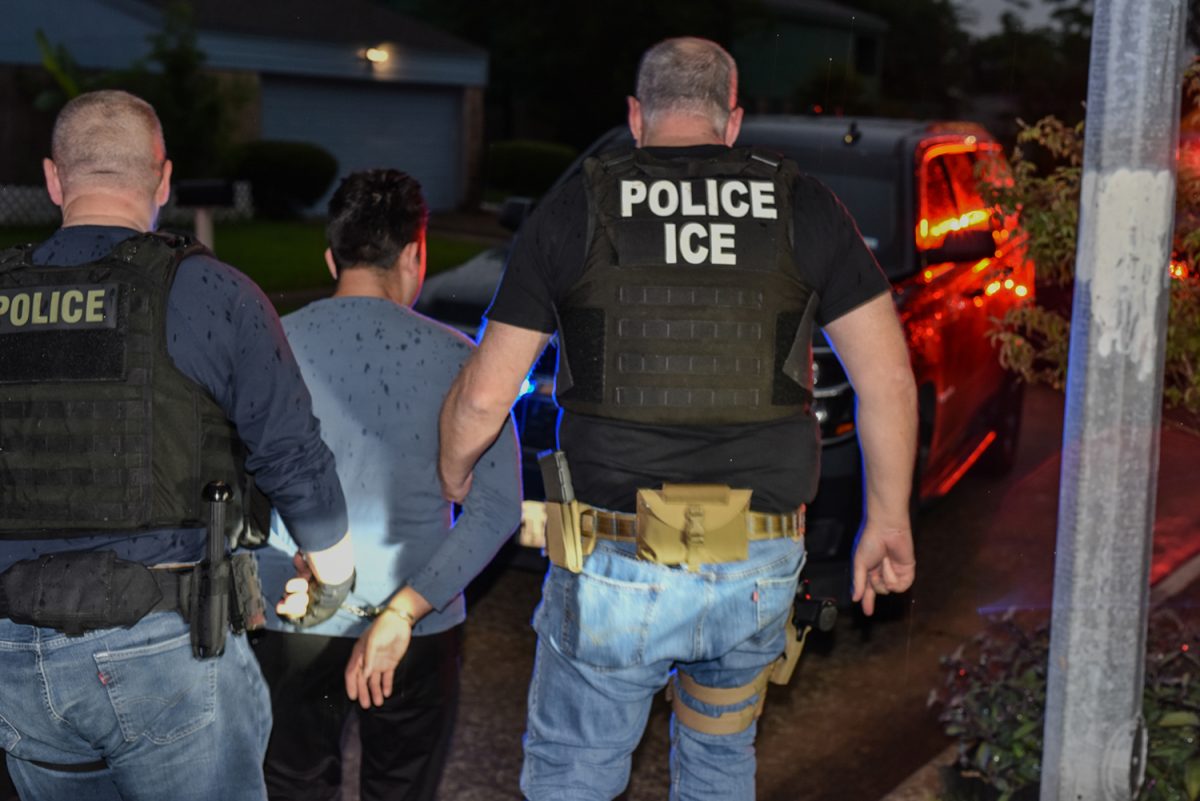
A Senate committee voted to approve a bill that would let Marylanders sue federal agents in state courts for constitutional violations, despite concerns by one Republican lawmaker who called it just “another slap at federal law enforcement” tasked with carrying out the Trump administration’s aggressive immigration agenda.
A House version of the No Kings Act passed the House of Delegates last month. The Senate version now goes to that body after its approval Tuesday by the Senate Judicial Proceedings Committee.
Senate Bill 346, sponsored by Judicial Proceedings Vice Chair Jeff Waldstreicher (D-Montgomery) is inspired by a federal law that allows individuals to sue state or local government officials for constitutional rights violations committed “under the color of law.” But Waldstreicher notes that there is “no mechanism to hold federal officials accountable for violations of constitutional rights.”
He said his bill would add federal officers – such as U.S. Immigration and Customs Enforcement agents – to those who can be sued, closing that “gap.”
House poised to approve bill creating tools to challenge federal agents in Maryland courts
“Maryland law enforcement officers are subject to civil liability under 42 USC section 1983. That’s current law,” Waldstreicher said. “We are creating a converse ‘1983’ and providing that other law enforcement agencies are similarly subject to the same law that Maryland law enforcement officers are subject to – but instead of federal court, in Maryland court.”
“That’s the basis of the bill, no more no less,” he said.
But Sen. William G. Folden (D-Frederick) sees the bill as targeting ICE agents for doing their jobs.
“I believe this is linked to immigration, that has been tagged to many things this session,” said Folden, a retired law enforcement officer, during Tuesday’s committee voting session. “The immigration law and the enforcement of those laws … now we’re opening up civil liability for the officers for the performance of those duties.
“This is yet another slap at federal law enforcement in the performance of their duties,” Folden said.
Folden noted that the bill allows people to file civil, not criminal, actions against office for alleged wrongdoing, and “the difference between criminal court and civil court is significant, ‘Preponderance of evidence’ versus ‘beyond a reasonable doubt.’
“So someone that feels, within a state that has already significantly watered down the immigration enforcement responsibilities of our federal partners, … they could then seek civil remedies against that officer in the performance of their duties,” he said.
Committee Chair William C. Smith (D-Montgomery), who co-sponsors SB 346, argued that the legislation does not just target ICE agents, but any federal agent who might overstep someone’s constitutional rights.
“Absent the title of the bill, take this away from immigration only – no one would want any federal official, law enforcement officer to violate anyone’s constitutional rights,” Smith said, to which Folden agreed. Sen. William G. Folden (R-Frederick) speaks on the Senate floor.
“If that federal official did so, we would want to provide our constituents with an avenue to seek civil relief for that violation,” Smith added.
“Well, maybe I am misguided in my impression by the title of the bill,” Folden said, ending his line of debate.
The Judicial Proceedings Committee voted to move the bill forward for full Senate consideration, with the three Republican members voting no.
The approval comes as the General Assembly nears next week’s “crossover” deadline, when bills need to move from their originating chamber to the other for best consideration. With the House approving its version of the No Kings bill last month, it bodes well for the success of the legislation.
House Bill 351, which passed the House 96-38 in February, would give the attorney general authority to use data collected through police surveillance methods, such as cellphone data or GPS location, to identify and gather evidence against a judicial officer if someone brought a complaint of wrongful conduct.
It was amended by the House Judiciary Committee to include the language of House Bill 332, the House’s version of the No Kings Act, and now awaits consideration by the Judicial Proceedings Committee.
Maryland Matters is part of States Newsroom, a nonprofit news network supported by grants and a coalition of donors as a 501c(3) public charity. Maryland Matters maintains editorial independence. Contact Editor Steve Crane for questions: editor@marylandmatters.org.

Discover more from The Free State Press
Subscribe to get the latest posts sent to your email.