
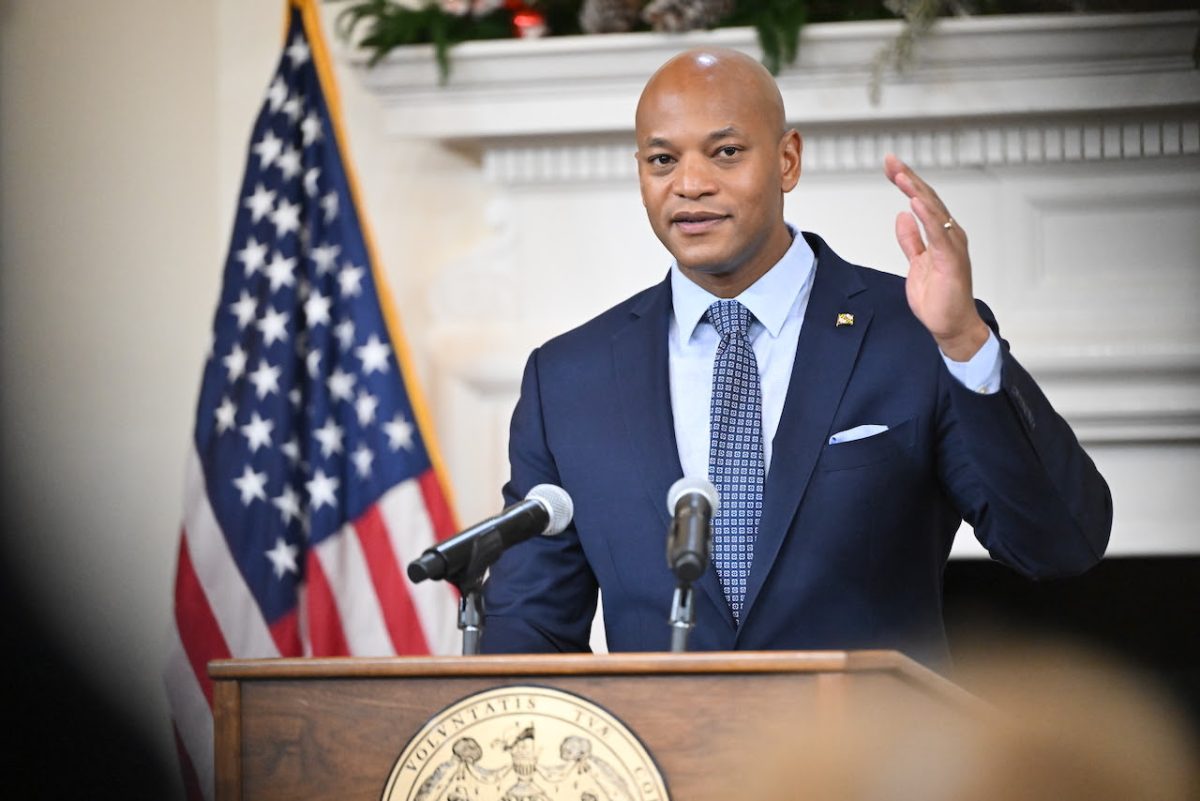
The recent leadership shake-up at Maryland’s Public Service Commission came as Gov. Wes Moore (D) was seeking a fresh direction for the board, which regulates gas and electric utilities in the state.
The governor announced earlier this month that he had selected Kumar Barve, a longtime state delegate who has served on the Commission since 2023, after a resignation from Chair Fred Hoover, a former director of the Maryland Energy Administration and assistant people’s counsel.
“In high-performing organizations, rotating leadership at regular intervals is a smart and normal practice,” wrote Ammar Moussa, a spokesman for the governor, in response to questions from Maryland Matters about the change.
To the Moore administration, the goal of the swap is to better address continued high electric bills for Maryland consumers.
“At a time when too many families are struggling with skyrocketing utility costs, we look forward to the Commission continuing to act with urgency to protect Marylanders and ensure no one is pushed to the brink — or bankrupted — just to keep the lights on and their homes warm,” Moussa wrote.
Some argued the governor’s decision was unsurprising, given his continued dissatisfaction about high electric bills, as an election year dawns.
But other observers, including consumer and environmental advocates, called the move a rare and troubling intervention by the governor in the dealings of a body that is largely independent from the executive branch. Maryland Public Service Commission Acting Chair Kumar Barve. (File photo by Bryan P. Sears/Maryland Matters)
The governor has the power to nominate commissioners and nominate the chair, but can only remove people from the commission for incompetence or misconduct. Notably, Hoover will continue serving on the commission, with his new term extending through 2029. But he will no longer hold the noteworthy agenda-setting powers of the chair.
In a statement, Hoover said it has been “a tremendous honor to serve the people of Maryland as chair of the Public Service Commission.”
“I look forward to continued collaboration with Chair Barve and my fellow commissioners in this new capacity. We have been and will continue to be strong, unified partners in the important work of the Commission,” Hoover said.
Both men appeared side-by-side during an energy hearing Tuesday before the House Environment and Transportation Committee, though Barve took a leading role.
Since they swapped terms, both Barve and Hoover must be re-confirmed by the Maryland Senate.
The timing of the move raised some eyebrows among advocates, who noted that the PSC under Hoover recently made several consequential decisions that went against gas and electric companies.
In late December, the commission denied BGE’s request to collect an additional $152.3 million from ratepayers for a “true-up,” citing the company’s “substantial overruns” of approved budgets. Instead, it let BGE collect about half that amount, which will still add 72 cents to the average household’s monthly electric bill, and $1.95 to the average home’s gas bill, starting next month.
Earlier in 2025, the PSC issued a policy requiring new gas customers to pay the full cost for pipeline extensions to their properties, instead of letting companies spread the cost among existing ratepayers.
It is rare to see state officials intervene with the sitting members of their public utilities board, who are traditionally seen as separate from politics, said Matt Kasper, deputy director for the Energy and Policy Institute. But when it does happen, there is an “elephant in the room” — the utilities, who wield immense influence and retain ranks of lobbyists, Kasper said.
“You’re left wondering: Did the utilities pressure the legislature, or pressure the governor, to make that change?” Kasper said. “That’s what I’m left wondering here.”
Barve pushed back on that notion.
We have become much more keenly aware of costs, and we’ve been micromanaging to a degree that previous Public Service Commissions may not have. I certainly anticipate that we’re going to continue that diligence into the future.
– Kumar Barve, acting chair of the Maryland Public Service Commission
“This is about serving the ratepayers in the state of Maryland,” Barve said. “We’re honest brokers. We don’t have to raise campaign contributions. We don’t have to run for office. We have fixed terms to do what we believe is the right thing.”
Barve argued that the PSC will continue to closely scrutinize utilities’ spending plans under his leadership.
“We have become much more keenly aware of costs, and we’ve been micromanaging to a degree that previous Public Service Commissions may not have,” Barve said. “I certainly anticipate that we’re going to continue that diligence into the future.”
Christine Pendzich, a steering committee member at Maryland Third Act, a climate and democracy group for people over 60, said she found the leadership change unusual.
“From everything I understand, it’s very unusual for a Public Service Commission chair to step down before the end of his term,” said Pendzich, who has focused on energy issues and the PJM grid as co-chair of Maryland Third Act’s energy working groups.
It is “notable,” Pendzich said, that Hoover didn’t share an explanation for his departure. “One does think that the governor must have weighed in,” she said.
“The sense of the community is that he [Barve] is a little bit more politically inclined to do probably what the governor would want, rather than really balancing costs and benefits between utilities and ratepayers,” Pendzich said.
Moore, other PJM governors push for changes at the nation’s biggest electric grid
Jorge Aguilar, southern region director for advocacy group Food and Water Watch, said, “The new PSC needs to tackle these eye-popping electricity bills while rejecting the insane pro-data center frenzy that will burden ratepayers with the cost of new gas and nuclear power plants.”
Adding to Kasper’s concern are documents he recently uncovered from the governor’s office, using a public information request, that showed that American Gas Association official Juan Alvarado was the only nongovernmental employee allowed to sit in on Moore’s interviews of possible PSC appointees after he took office in 2023.
“I’ve published some information to show that the Moore administration has allowed utility influence behind the scenes,” Kasper said. “I’m left wondering … is there a coziness here?”
The Moore administration defended the involvement of the association, a trade group representing gas companies, arguing that it was purely informative. Moussa wrote that “it was not uncommon for industry experts to serve as consultants or references during the board or commission placement process.”
“Highly technical knowledge, like that required to serve on the PSC, requires appropriate insight to ensure appropriate placement. Serving in a separate capacity, consultants or references have no decision-making role and no vote on placement.”
Moore nominated Alvarado to the PSC in February 2023, but Alvarado withdrew from consideration, citing “personal reasons,” amid concerns from climate groups.
To Emily Scarr, senior adviser for Maryland PIRG, the gas industry’s presence at the meeting was “entirely inappropriate, and raises serious concerns.”
“The concern is when there is a perception that only certain people are in the room, or when things are happening behind closed doors the public isn’t aware of,” Scarr said.
Josh Tulkin, executive director of the Maryland Sierra Club, said he asked the Moore administration to attend the meetings, and was “told that non-government officials were not invited.”¨C11C
In an interview after the leadership change, Maryland Senate President Bill Ferguson (D- Baltimore City) argued that the commission lost its way, and did not do enough to anticipate and slow down rate hikes.
“I want them to have a laser-like focus on affordability,” Ferguson said. “The pendulum swung away from from affordability, and really was exclusively on reliability and and climate purposes.”
Ferguson said, though, that the commission should “absolutely” take continued steps to scrutinize utility costs, like they did in the BGE decision in December.
“I think certainly BGE is still doing fine without the reconciliation from the last three-year rate hike,” Ferguson said. “We need in-depth analysis to make sure that any request of any additional dollars — and the potential of reducing rates — is the driving focus of the work moving forward.”
Del. C.T. Wilson (D- Charles), who worked closely on energy policy last session during his time as Economic Matters chairman, agreed. He argued that a commission leadership change was “bound to happen” amid continued blowback about high electric bills from voters. The commission also came to “repeated loggerheads” with the General Assembly, Wilson said.
He said the commission was acting more as a “rubber stamp” at a time when decisive action was needed to curtail rates before they became too high a burden. And last January, prices became a political flashpoint as legislators arrived in Annapolis.
“As a state, we’ve become wholly unprepared for what’s getting ready to hit us,” Wilson said.
Maryland Matters is part of States Newsroom, a nonprofit news network supported by grants and a coalition of donors as a 501c(3) public charity. Maryland Matters maintains editorial independence. Contact Editor Steve Crane for questions: editor@marylandmatters.org.
Discover more from The Free State Press
Subscribe to get the latest posts sent to your email.